Search this site:


Beware Phony Handbag LeatherSpotting Fake Handbag LeatherLouis Vuitton Speedy 25 Louis Vuitton Speedy 30 Louis Vuitton Speedy 35 Louis Vuitton Speedy 40 Coach Madison Sabrina Coach Madison OP Art Coach Madison Carryall Coach Madison Maggie Coach Madison Audrey Coach Poppy Graffiti Handbag Coach Poppy Tote Coach Poppy Wallet Coach Poppy Wristlet Coach Beach Tote Coach Julia Tote Coach Charm Tote Coach Kristin Collection Coach Peyton Collection Coach Brooke handbag Coach Carly Handbag Coach Zoe Handbag  

Handbag (X)  
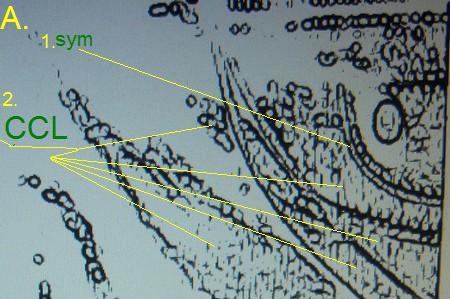
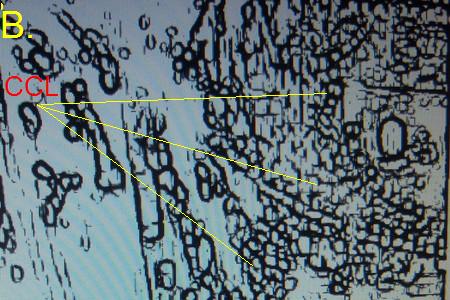
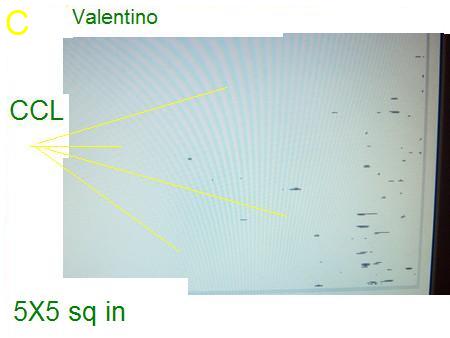
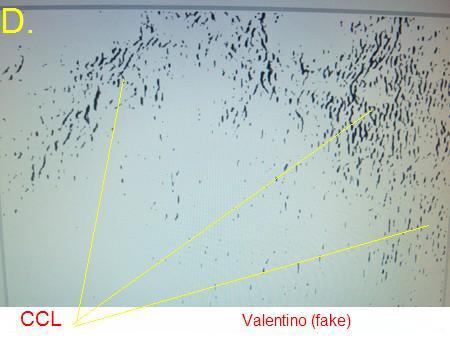
Material can be broken into three categories. Smell, feel and crease patterns. (If you are deciphering from pictures skip to crease pattern.) Leather Smell: This is obvious, but authentic leather should smell like leather. This is a simple and primitive (but powerful) test. Just take a whiff! If you are not familiar with specific leather smells, then you should go into a mall where known authentic quality products are being sold and gauge the different aromas. It is best if you have access to authentic designer handbags. Because the highest quality leathers like croc, calf etc, will have subtle differences in their smells. Compare the high quality leather smells to a known fake. Fake leathers, and low quality leathers will have a synthetic odor, due to the different materials they are mixed with. If a handbag fails the smell test it is most likely a fake. Feel: This is also a step that will be skipped if you are deciphering via online photographs. The higher the quality the leather the softer the handbag should feel. Fake handbags, especially fake handbags that are imitating high end designer bags, will generally fell more stiff than there authentic counterpart. Crease patterns: This test is done by comparing photographs online. When you are shopping online, detecting phony leather can be difficult without the smell and feel testing. But the crease pattern analysis can be just as powerful, but slightly more time consuming. What this test does is look for patterns in the creases that would generally be associated with either high quality, low quality, or fake leather altogether. You can do his by eye. In this section below we will demonstrate some techniques on how best to detect these differences in crease patterns. Crease Pattern [CP]: What you will find with high quality leather are crease patterns that are very tiny, and tightly integrated. What is generally associated with actual animal hide. Or think flesh. However, on fake handbags the crease patterns generally do not correspond to patterns of natural hide. They will tend to have dramatically different sized creases (artificially manufactured creases). The quality of the crease patterns will also look less uniform. They will tend to appear more erratic, bubbly etc, than the smooth fluency of the high quality natural hide. This is due to the mixing of non-leather materials and using creasing and wrinkling techniques to simulate natural hide. It is these techniques that will leave clues. What we are going to demonstrate below is how to take a photographic image of handbag leather and run the image through a sketch, or black and white paint effect. What this does is strip the image of all its color properties, glare, etc, thus highlighting, via a sketch-like diagram, the details and crease patterns in the leather. Thus making a crease line distinction much more evident. Note: All sketch diagrams are of actual designer handbag and fake handbag leather. Balenciaga handbag leather
[A.] This is an image of an authentic Balenciaga handbag with high quality calf leather. In this image you can see that many of the crease patterns are faint, and in some cases are not showing at all. This is what would be expected of high quality calf leather. High quality leather generally has tiny homogenous crease patterns that are consistent with natural hide. [B.] This is an image of a counterfeit version of the fake Balenciaga handbag pictured in A (note the same circular snap pictured in the mid-right side of both pics). In this image (B), the creases appear much more bold, erratic and numerous. They are much less consistent. There is no fading from dark to light. This is what would be expected of handbag leather attempting to mimic a natural calf hide. The boldness of the crease lines illustrates the deeper crease valleys in the hide. This is evidence of a forced design and artificial pattern, rather than one occurring via natural processes. Valentino handbag leather
[C] This is an image of a patch of authentic Valentino leather. Here the creases lines nearly did not register at all. This is evidence again for a small, tight and consistent natural CP. [D.] This is image is of a fake patch of leather from a Valentino handbag. Here the top creases are very bold, but the bottom creases are not registering. This is a highly inconsistent CP and evidence that the handbag leather may be artificial. The bold creases at the top imply a very deeply wrinkled area, and a very finely creases bottom. Much more inconsistency than photo C. Balenciaga handbag leather
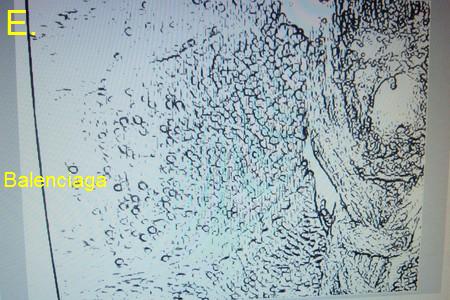
[E.] E (middle) is an image of another (but completely different) authentic Balenciaga handbag. If you compare the sketch lines of E, to A and B (the images from earlier), you can see that the crease pattern is consistent with the natural patterns of A. Although the leather is different (therefore the image is not an exact match). Regardless, the patterns fade from darker to lighter in a natural way consistent with image A. However that fake pattern is blotchy and erratic. Juicy Couture handbag leather
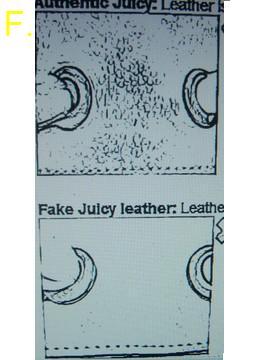
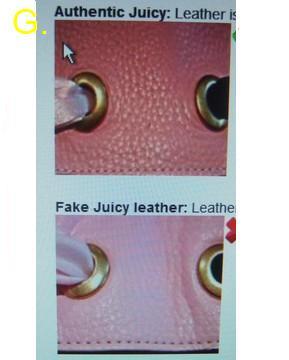
[F] In this image a fake and an authentic Juicy Couture handbag are being compared, and in [G] we have the actual photo. The leather quality utilized in authentic Juicy Couture is not the high quality associated with Balenciaga, Valentino, Chanel etc, but there is a noticeable difference between the real and the fake leather. Here the opposite holds true for the Juicy leather in this example. The Crease pattern in the authentic bag are more bold and defined than in the fake. This is because the leather style in the authentic Juicy is different than the Balenciaga, as well being a lower quality leather than the Balenciaga calf. Nonetheless, there is a clear distinction between the real and the fake. These distinctions should evident in the majority of examinations where authentic handbag leather is compared to its fake analogue. The idea of using the [black;white] image detail is that it filters out much of the background noise. And the textural discrepancies are easily detected. For a more detailed info check out our binary image processing paper as a counterfeit detection method. Material filter
* X = Handbag in filter (bag in question) * S = smell of the bag in filter (X) * F = feel of the bag in filter (X) * C = crease pattern on the bag in filter (X) * Â = authentic leather of an equivalent and comparable handbag † If smell (S) and feel (F) cannot be established due to online analysis, then and Subtract 5% if (X) survives filter from the final authenticity probability. live[ebay]
|